Educational content only. Not medical, psychological, or health services. Aotearoa, New Zealand.

Evening Design Guide

A practical step-by-step approach to creating your personalised evening routine.

The Design Process

Creating a sustainable evening routine isn't about following a perfect template—it's about understanding your needs, constraints, and preferences, then building something that fits your actual life.

This guide walks through five steps to design a routine that works for you.
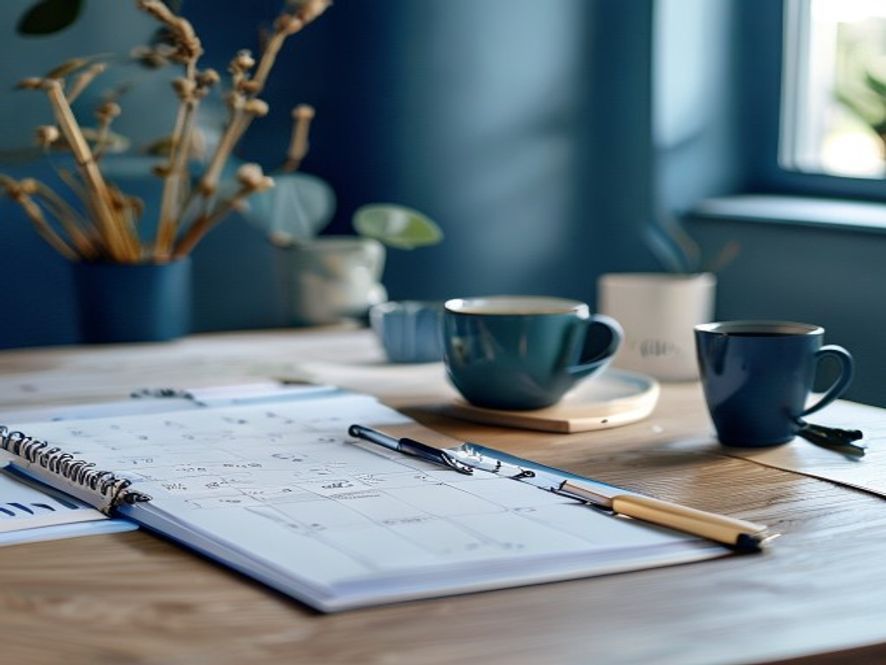
Workspace with planning materials and notes for designing an evening routine

Five-Step Design Process

Step 1

Audit Your Current Evening

Spend 3–5 days noting what you actually do, when you do it, and how you feel. This isn't about judgment—it's about seeing the current reality before making changes.

  • What time do you usually finish work or major activities?
  • What do you currently do before sleep?
  • When do you typically sleep?
  • What works well? What feels rushed or stressful?
Step 2

Identify Time Anchors

Find 2–3 fixed activities or times in your evening that won't change. These become the scaffolding for your routine.

  • Dinner time (when you eat)
  • Personal hygiene (shower, getting ready for bed)
  • Target sleep time (when you want to be asleep)
Step 3

Choose a Framework Model

Select one of the three core models (time-blocked, checklist, or flow) that resonates with your personality and schedule. You can adjust later.

Review the framework options →

Step 4

Build and Test (2–3 Weeks)

Implement your routine with the understanding that it's a draft. Track what happens: moods, consistency, obstacles, surprises.

  • Did you stick to the plan?
  • What felt natural? What felt forced?
  • What would make it more sustainable?
Step 5

Refine Based on Data

Review your notes. Make small adjustments—swap one activity, shift a time slightly, add an element from your environment audit.

Continue for another 2–3 weeks. Iterate until you have something sustainable.

Design Worksheet

Use this outline to draft your personalised routine:

My Time Anchors

Dinner finishes: _______

Personal hygiene starts: _______

Target sleep time: _______

Total window available: _______ minutes

My Chosen Framework

☐ Time-Blocked   ☐ Checklist   ☐ Flow

Activities I Want to Include

What 4–6 activities help you transition to calm?

1. _____________   2. _____________

3. _____________   4. _____________

5. _____________   6. _____________

Environment Adjustments (Pick 1–2 First)

☐ Lighting   ☐ Temperature   ☐ Sound   ☐ Device boundaries   ☐ Other: _______

My Success Metrics (for 2–3 weeks)

Consistency: How many days per week did I follow the routine?

Satisfaction: How did I feel at the start and end of my routine?

Obstacles: What got in the way? What surprised me?

Download and print this worksheet, or use it as a template in your preferred format.

Common Adjustments

If you're inconsistent

Your routine might be too complex. Simplify to 3–4 core activities. Make each super easy to do.

If you feel rushed

Your evening window might be too short. Start earlier, or reduce the number of activities. Consistency beats perfection.

If you feel bored

Vary your activities while keeping the structure. Same 5-step checklist, different options for items 2 and 4.

If you can't stick to times

Try the checklist or flow model instead. They're more flexible about clock time.

If the environment feels off

Make one small change at a time. Wait a week, then evaluate. Too many changes at once confuses what actually helps.

If you keep forgetting

Use a reminder (phone alert, calendar, checklist printed and visible). External cues help until the routine becomes automatic.

Ready to Design Your Routine?

Work with a coach to personalise this process for your life.

Book a Consultation